
Joist Rot, Railing Failures, and Ledger Problems Found and Fixed
Full structural diagnostic before any surface work is scoped, we find the actual failure, not just the symptom.
What We Do
What Deck Repair in Seattle Actually Covers
Deck repair in Seattle means diagnosing the structure first, then fixing what's actually failing.
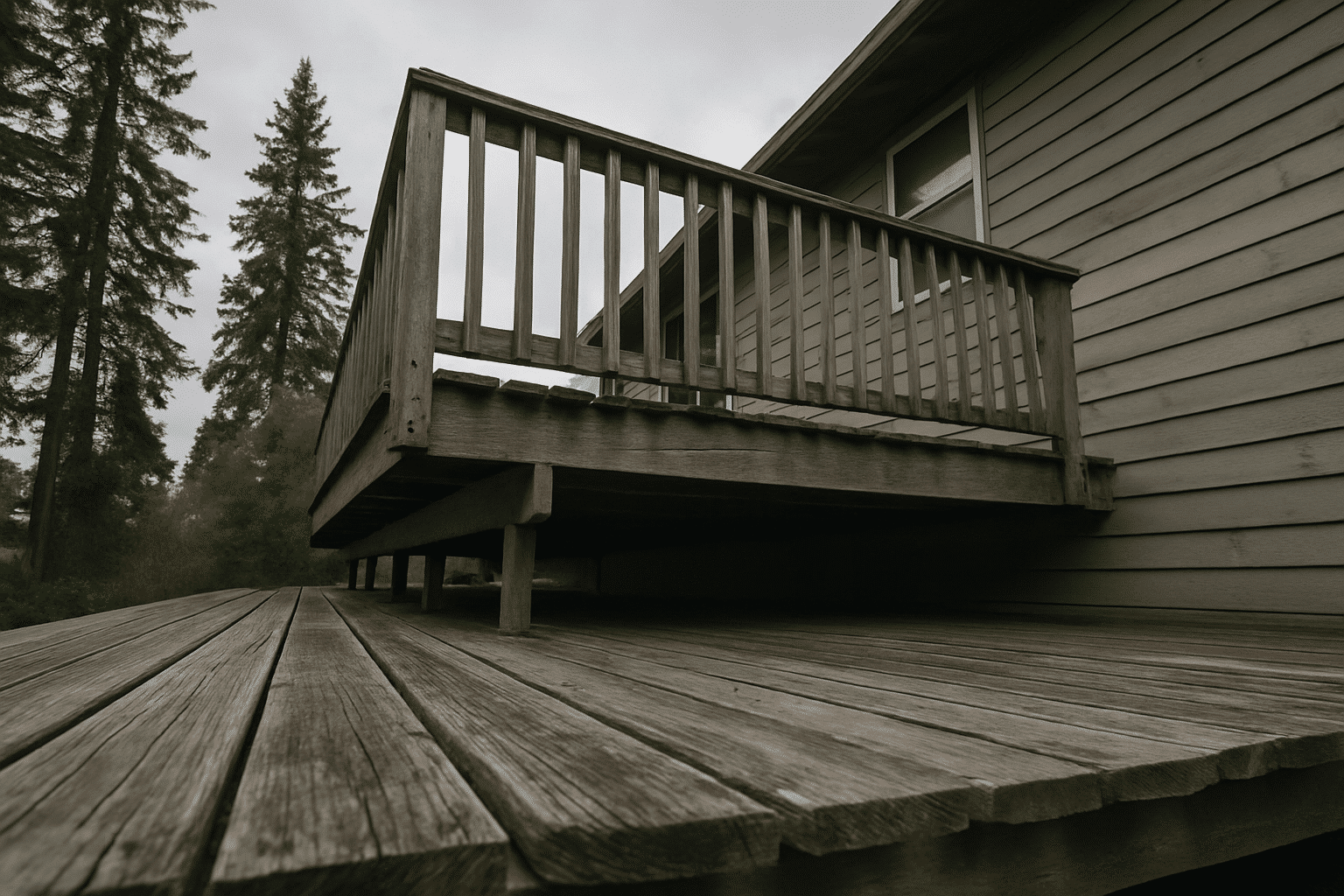
Most deck repairs in Seattle aren't surface problems. They start at the surface, a soft board underfoot, a railing post that moves when grabbed, but the cause lives deeper. A board feels soft because the joist beneath it has been holding moisture at the top edge for years. A post rocks because the wood below the post base hardware has been compressing against trapped water since the deck was built. The symptom shows up on top. The failure lives in the frame.
RT Signature Homes conducts a full structural diagnostic, checking ledger attachment hardware, joist condition from below, post base connections, and railing torque resistance, before any repair scope is written. This is how deck repair actually works: address the failure point, not just the thing that made you pick up the phone.
Local Experience
Serving Seattle Deck Repair Projects Since 2015
RT Signature Homes has assessed and repaired decks across Seattle's residential neighborhoods for ten years.
We serve deck repair projects across Seattle from zip codes 98103 in Fremont through 98118 in Rainier Beach. The same project manager who conducts the diagnostic inspection manages the repair. No assessment details get lost between the evaluation and the build.
Seattle averages over 37 inches of rain annually. That moisture finds every horizontal surface, it pools against decking screws, migrates down through the screw shaft, and sits against the top edge of the joist below. By the time a board feels soft, the joist beneath it has often been deteriorating for three to five years. We've seen this pattern consistently across neighborhoods from Queen Anne to Rainier Beach to Fremont.
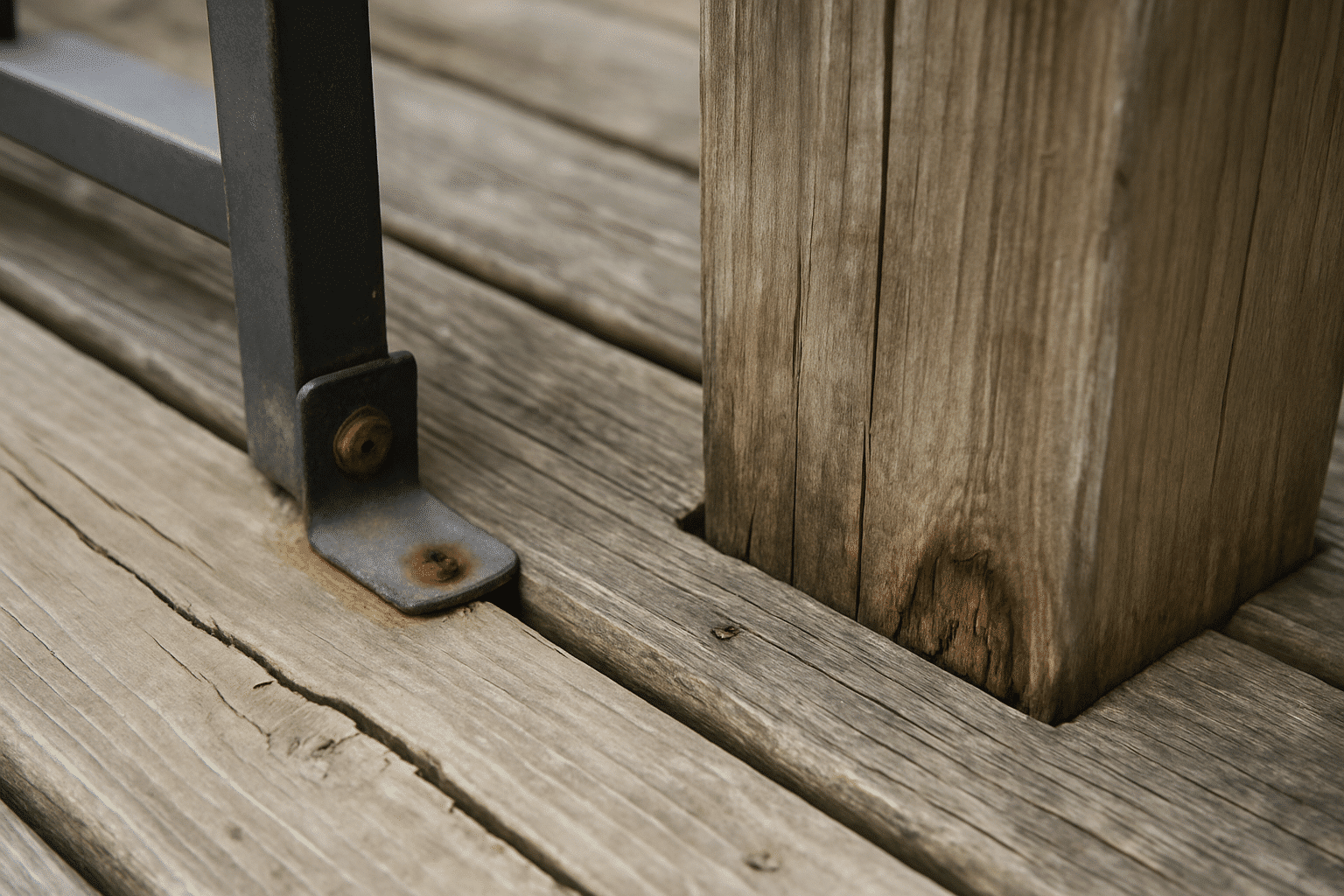
Post base hardware on decks built more than ten years ago is another consistent finding. Hardware not rated for prolonged moisture exposure corrodes, loses structural connection, and allows the post to shift. The railing attached to that post begins to move.
From the Owner
A Diagnostic Story: What We Find When We Get Under the Deck
The surface told one story. The framing told a different one.
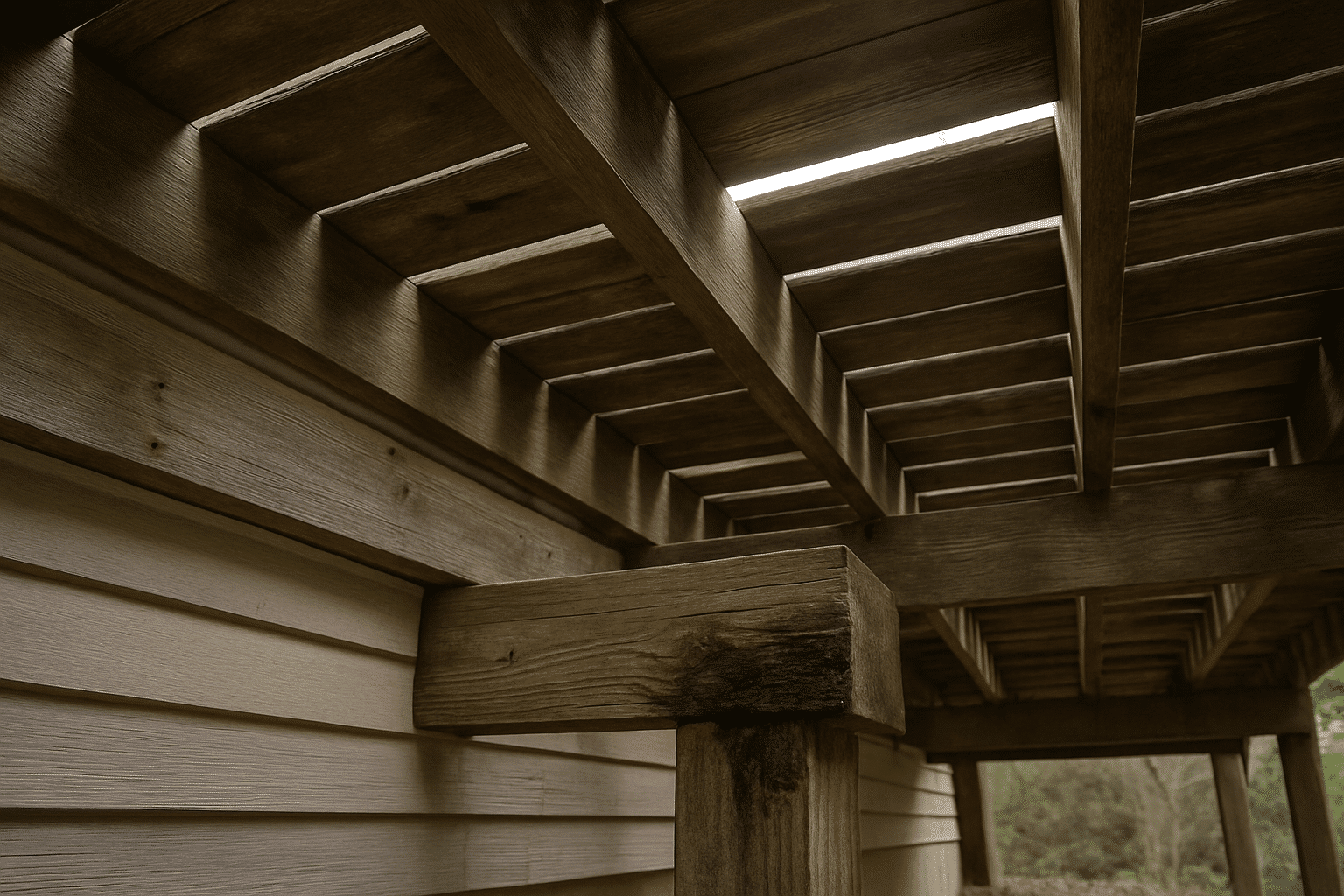
I went under the deck before I said anything about the surface. That's always the first step. What I found was a joist that had lost about two-thirds of its cross section at the top edge, right where it ran under the affected boards. Understanding how Seattle's rain accelerates wood rot explains exactly why this pattern keeps showing up: moisture had tracked in along the decking screws for years. The joist hadn't collapsed, but it was well past the point where sister-boarding alone would restore structural capacity. It needed full replacement.
We also found the ledger flashing had a gap at the left side. Water was getting behind the flashing and running down the band joist attached to the house. There was some softness in the rim joist at that point. That wasn't in the original call.
We scoped the full repair: two joist replacements, ledger flashing correction, and board replacement over the affected bay. The homeowner had the information they needed to make a real decision, not a patch that would have come back as a bigger problem within a season.
What We Do
Your Railing Test Result Is Yours to Know Before We Write a Single Line of Scope
RT Signature Homes performs a railing torque test on every deck diagnostic, no assumptions, no skipped steps.
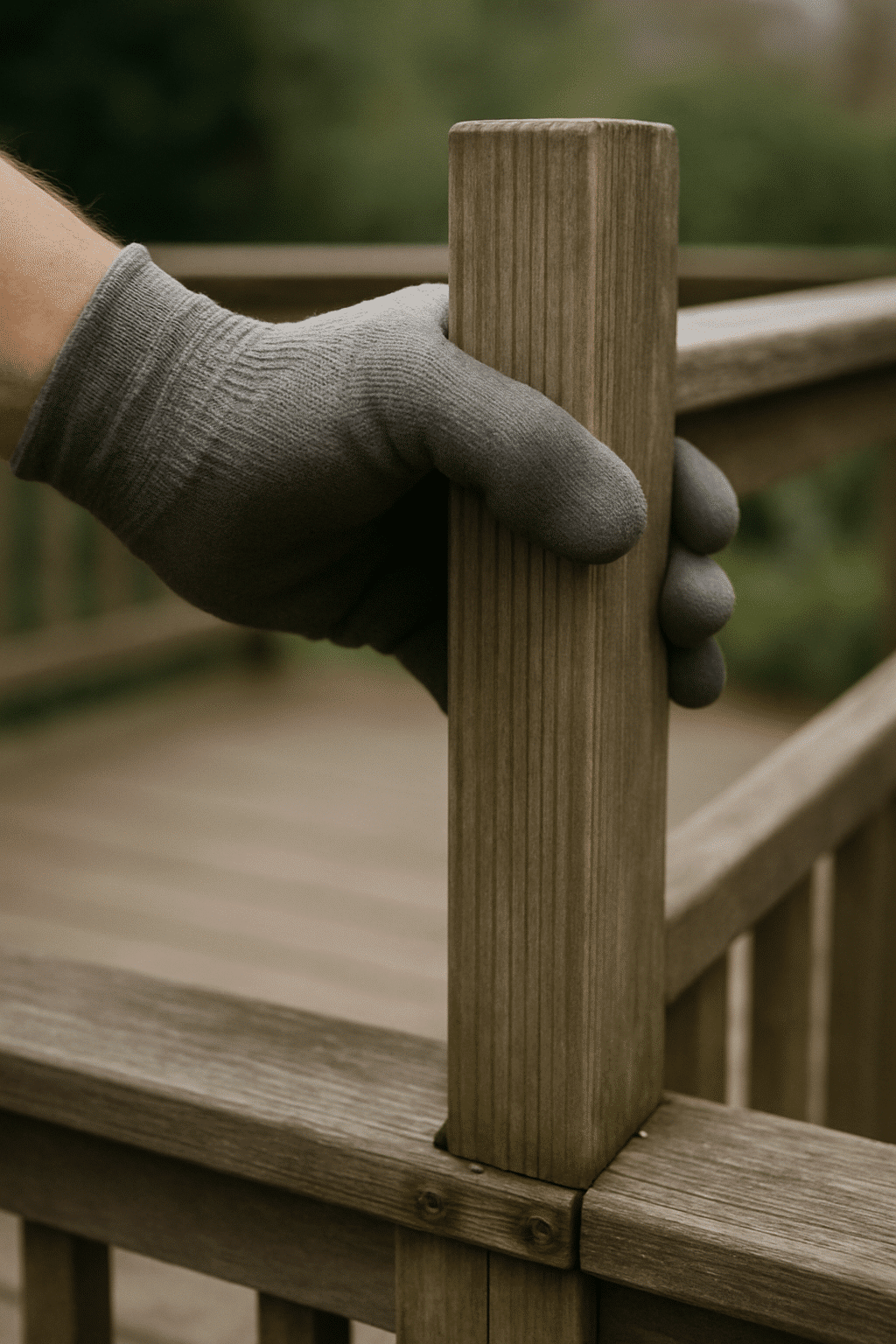
A railing torque test, the physical application of lateral force at the top of each post to measure deflection, tells us whether a post meets the IRC maximum of one inch of movement at 42 inches of height. A post that exceeds that limit is structurally loose by code definition, regardless of how it looks from a distance.
We perform this test on every post during every diagnostic, whether or not the homeowner mentioned the railing. A railing failure isn't always visible, it shows up when someone leans against a post on a second-story deck. Finding it during a diagnostic is the right time.
If posts pass the torque test, we document it and move on. If they don't, we explain what that means for repair scope, post base hardware replacement, post base wood condition assessment, or full post replacement depending on what we find at the connection point.
What We Do
How We Assess and Repair Seattle Decks
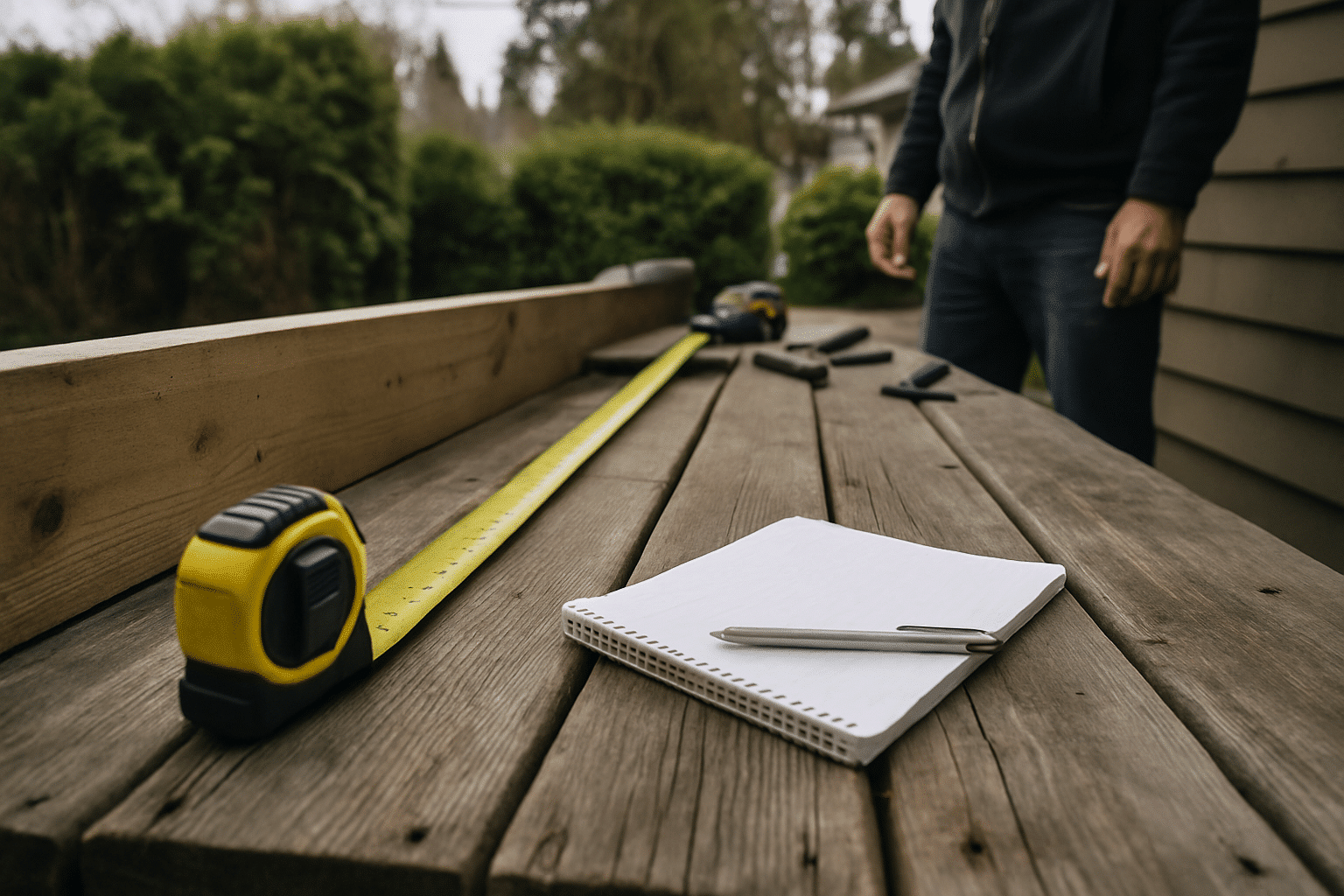
Every deck repair assessment at RT Signature Homes follows a consistent structural checklist, not a visual scan.
Structural attachment failures at the ledger are also a common issue for elevated structures. If your project involves structural attachment and waterproofing for balconies, the same diagnostic principles apply and the same code standards govern the work. For deck structural repairs that require permits, we follow all permit requirements for deck structural repairs as defined by the city, and you can also review Seattle SDCI permit requirements for deck repairs directly.
Our diagnostic and repair standards for Seattle deck projects:
- Joist inspection from below, top edge condition, cross-section loss, moisture staining, and hardware corrosion assessed at every joist in the affected bay
- Ledger inspection, flashing gap assessment, through-bolt condition, wood degradation at the house attachment point, and separation from the band joist
- Post base hardware check, corrosion rating confirmed against current hardware specifications for prolonged moisture exposure
- Railing torque test, lateral force applied at post top, deflection measured against IRC one-inch maximum at 42-inch height
- Board replacement material selection, matched to existing species or upgraded to a more moisture-resistant species or composite when joists are confirmed sound
- Repair vs. replacement threshold, assessed against the 30-40 percent framing deterioration benchmark before any repair scope is finalized
We don't order materials before the diagnostic is complete. The scope follows the findings, not the other way around.
The Process
From Diagnostic to Completed Repair: The RT Signature Process
RT Signature Homes manages the deck repair process from first assessment through final inspection, one team, one project manager.
Phase One: Diagnostic Assessment
The project manager conducts a full inspection of the deck from below and above. Joist rot, wood decay in a deck's horizontal framing members caused by prolonged moisture exposure, is assessed at the top edge of each joist. The ledger inspection, a physical and visual assessment of the horizontal member bolted to the home's structure, checks flashing, through-bolt corrosion, and wood condition at the house attachment point. The railing torque test is performed on every post.
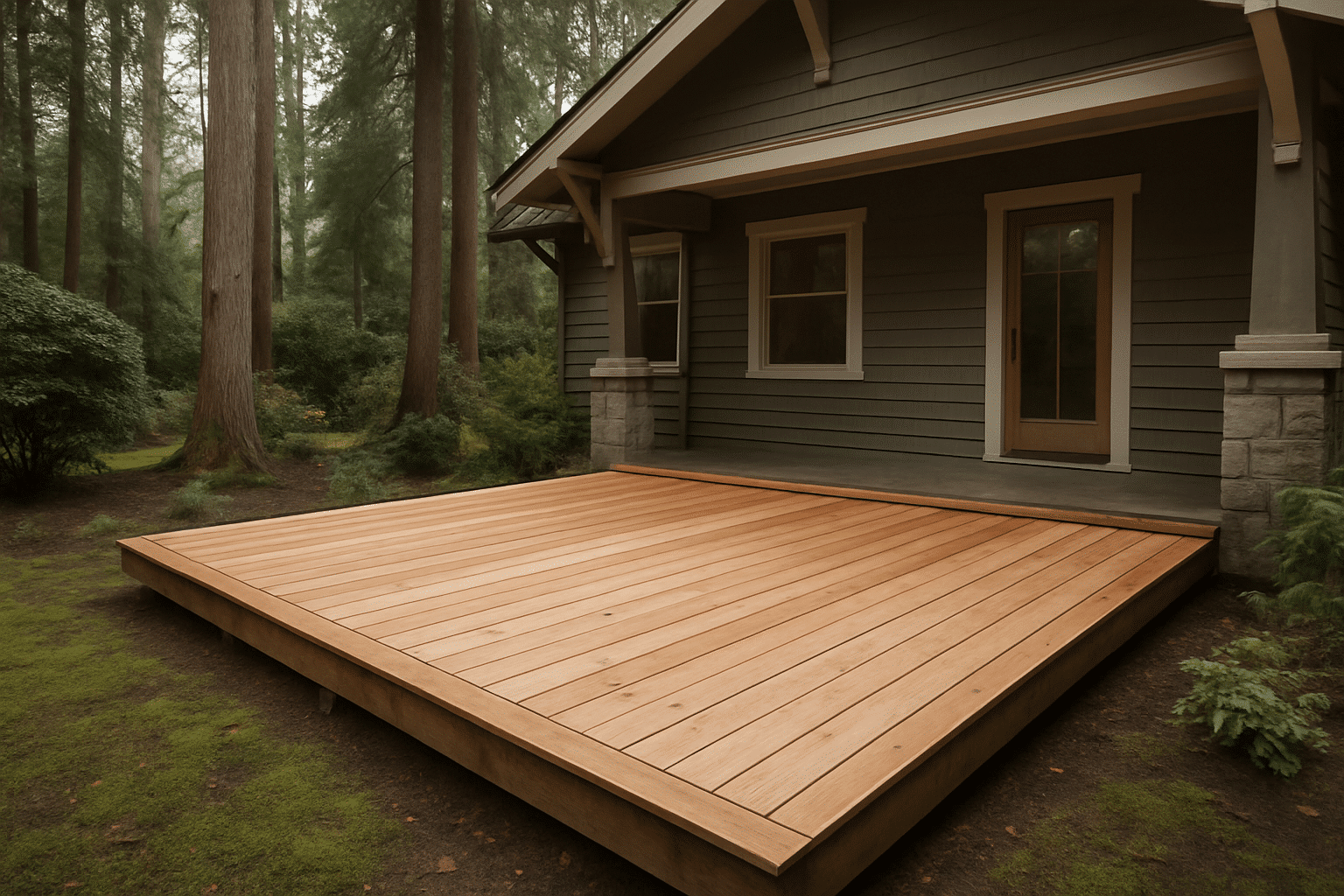
Findings are documented and the repair scope is written from the diagnostic results. If the deck crosses the repair vs. replacement threshold, the point at which more than 30-40 percent of framing members show active rot, the homeowner receives a clear explanation of why full replacement is the stronger investment. In cases where the existing structure can't be salvaged through repair alone, new deck construction in Seattle may be the more sound and cost-effective path forward.
Phase Two: Implementation
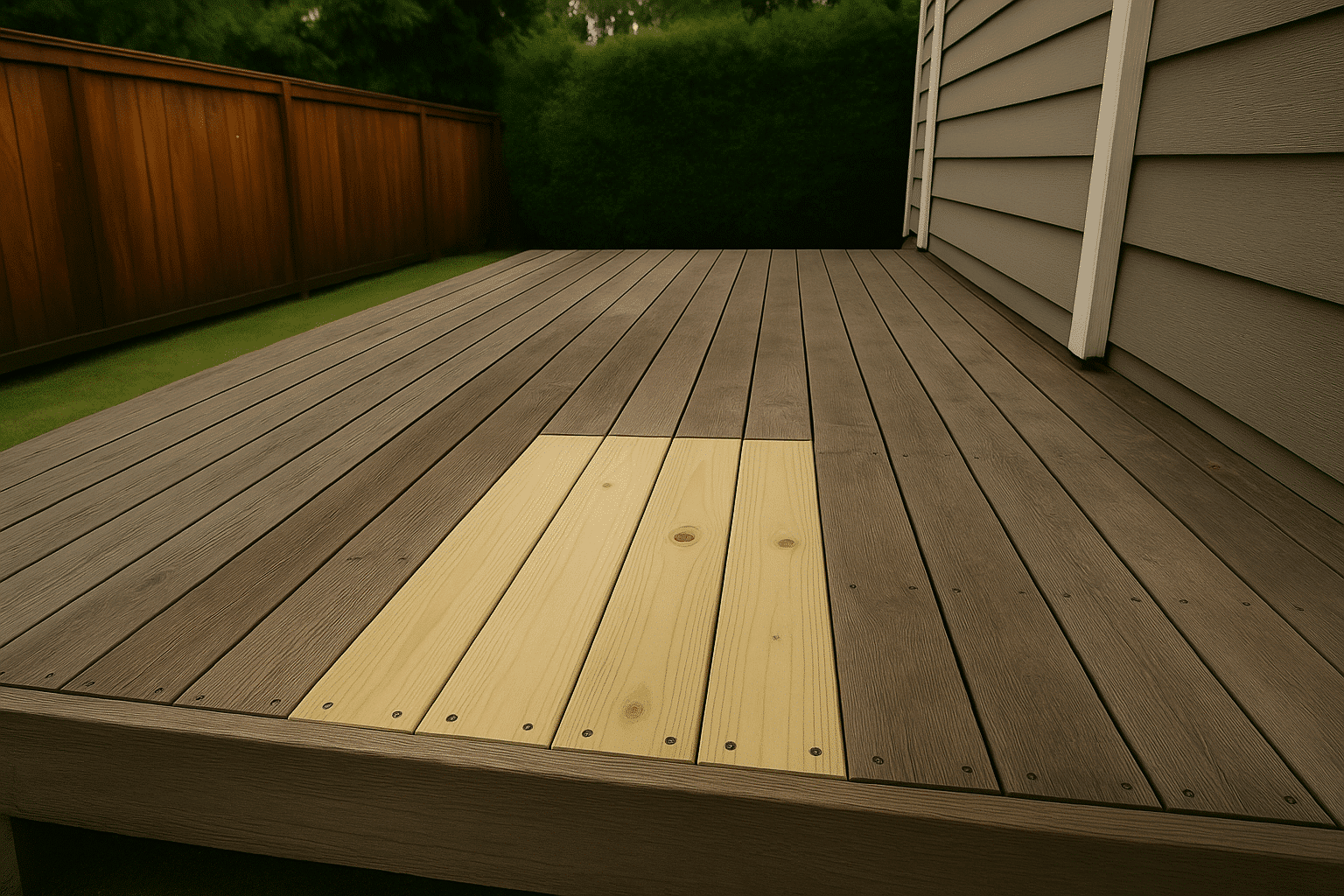
Deck board replacement, the removal and replacement of individual surface boards, proceeds only after joists are confirmed sound. If joists need replacement, that work happens first. Post base hardware is replaced with corrosion-rated connectors appropriate for Seattle's wet climate. Ledger flashing is corrected before any surface work covers it.
Phase Three: Post-Repair Review
The completed repair is reviewed against the original diagnostic findings before the project manager closes the scope. Every structural repair point is verified. The homeowner receives a plain-language summary of what was replaced, what was confirmed sound, and any conditions worth monitoring in future seasons.
Where We Build
Seattle Neighborhoods Where We Repair Decks
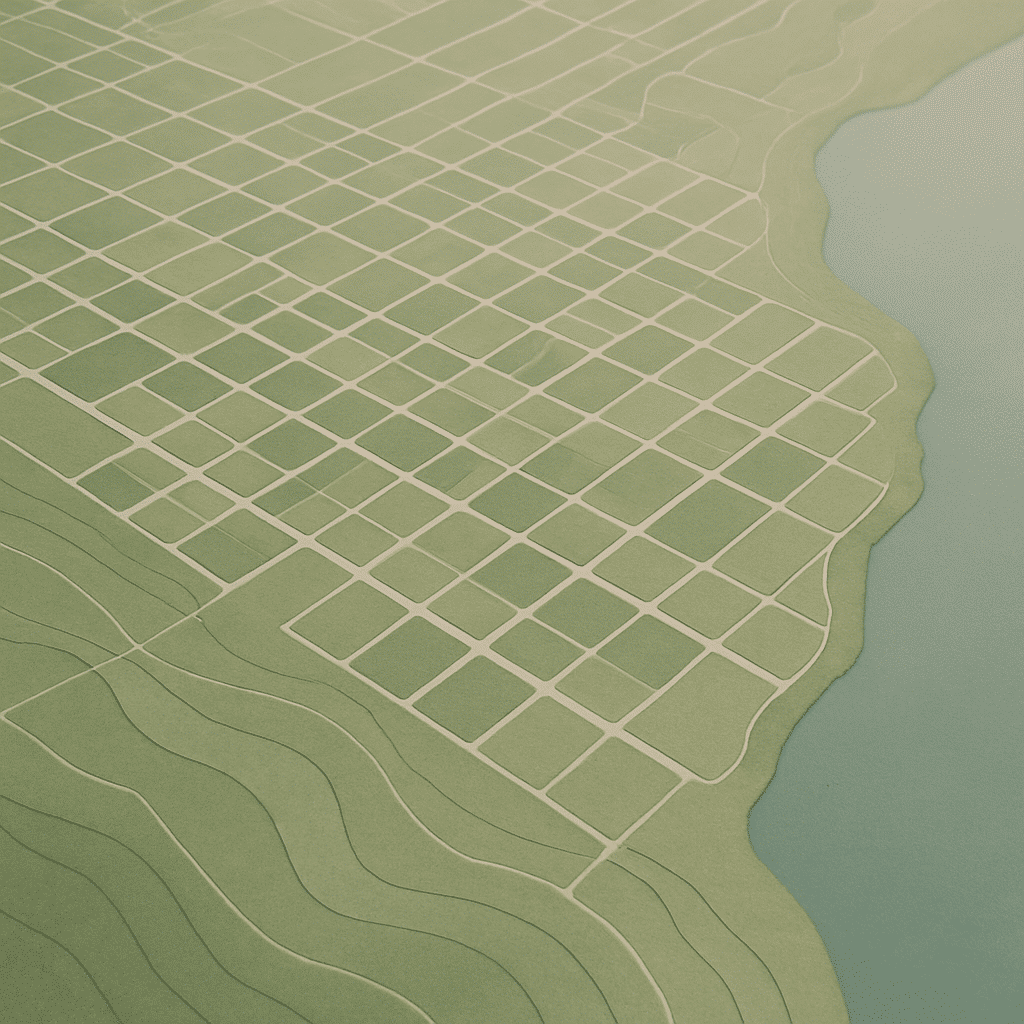
RT Signature Homes serves deck repair and maintenance projects across Seattle's residential neighborhoods.
Common Questions
Frequently Asked Questions
How much does a deck repair typically cost in Seattle?
Deck repair costs in Seattle range from $800 to $6,000+ depending on what the diagnostic finds. A few board replacements over sound joists sit at the low end. Joist replacement, ledger correction, and full post base hardware replacement push costs higher. RT Signature Homes writes the scope from actual diagnostic findings, not a pre-set package, so the estimate reflects what your specific deck actually needs.
How long does a deck repair take from the first site visit to finished work?
Most deck repairs take one to five days of active work once the scope is confirmed. The diagnostic assessment happens first, typically one site visit. Minor board replacements finish in a day. Joist replacement or ledger correction adds time based on the number of affected members. RT Signature Homes schedules the repair immediately after the scope is written, using the same project manager who conducted the assessment.
What does RT Signature Homes check during a deck diagnostic that other contractors skip?
RT Signature Homes checks ledger attachment hardware, joist condition from below, post base corrosion, and railing torque resistance on every assessment. Most contractors inspect from the surface only. Joist rot starts at the top edge, invisible until the board is soft. The railing torque test catches posts that are loose before they fail. The diagnostic drives the scope, not a visual estimate from above.
My deck boards are soft in one corner, do I need to replace the whole deck?
Soft boards in one area don't automatically mean full replacement. The repair-vs.-replacement threshold is reached when more than 30-40 percent of framing members show active rot. A corner with soft boards often involves one or two joists beneath that bay. RT Signature Homes confirms exactly what's affected before any scope is written, most soft-board calls result in targeted joist and board replacement, not a full rebuild.
My railing feels solid, do I still need a railing torque test?
Yes. A railing that feels solid from casual contact can still fail the IRC deflection standard. The test applies lateral force at post top and measures movement against the one-inch maximum at 42 inches of height. Posts that compress against trapped moisture at the base often feel firm but have lost structural connection below the hardware. RT Signature Homes performs this test on every post during every diagnostic, regardless of how the railing feels by hand.
Does deck repair in Seattle require a building permit?
Board replacement and hardware repairs on an existing deck generally do not require a Seattle building permit. Structural repairs, joist replacement, ledger re-attachment, or post replacement, may trigger a permit depending on the extent of the framing work. RT Signature Homes confirms permit requirements before the repair scope is finalized, so no structural work proceeds without the correct permit status confirmed.